When Complacency Ignores War Signals
Wars are prepared long in advance, Investors react, they do not prepare.

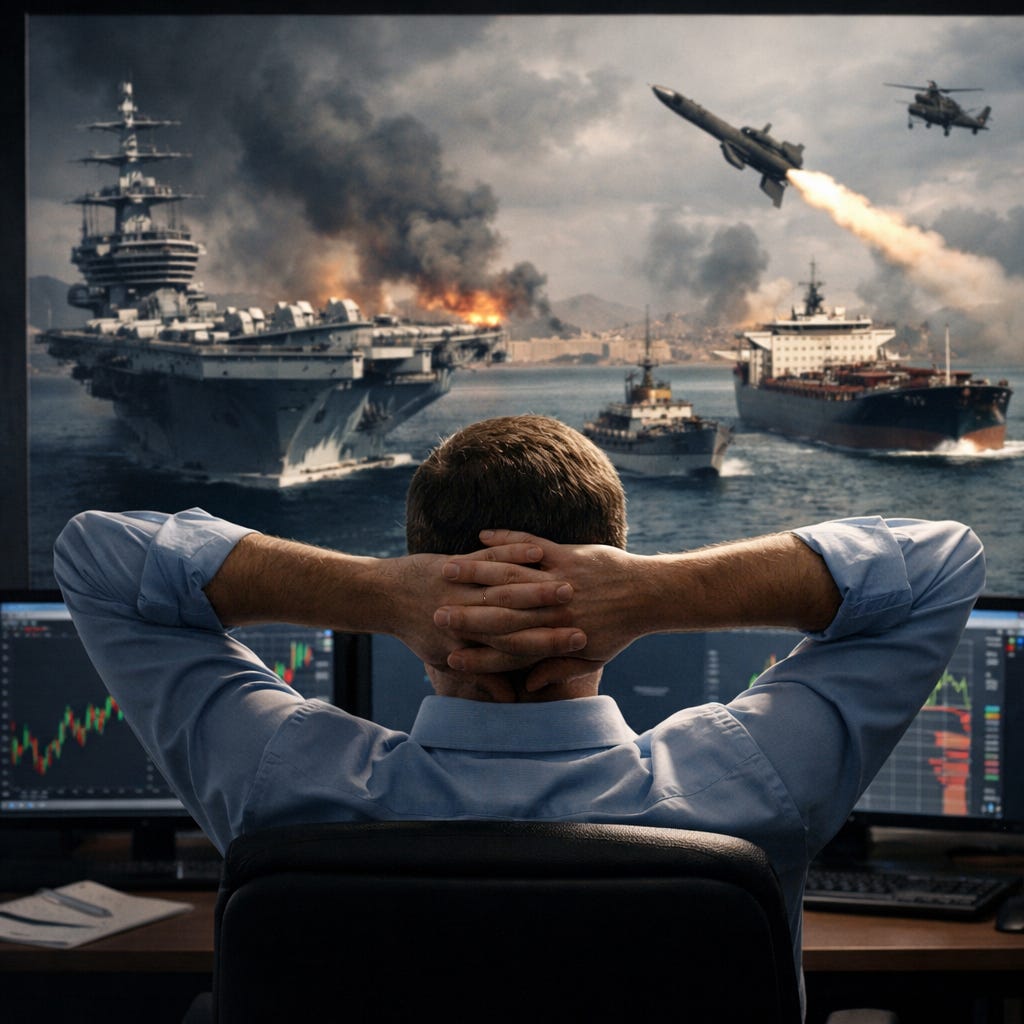
MARKETS ARE RELAXED, WARS RARELY ARE !
Wars do not erupt overnight.
They are prepared months in advance — and the preparations are clearly visible to those willing to look.
The United States is assembling one of its largest military deployments in the Middle East since the early 2000s. President Donald Trump has issued an explicit ultimatum to the Iranian regime.
Iran, for its part, is conducting large-scale naval exercises in the Strait of Hormuz, reportedly coordinated with Chinese and Russian naval intelligence support.
Simultaneously:
Non-essential personnel are being evacuated from Iran by multiple nations — including China and Russia.
US diplomatic and non-essential military staff reductions are occurring across Lebanon, Iraq, and parts of the Gulf.
Poland has evacuated its citizens from Israel and asked all Nationals to leave Iran immediately.
Germany is reducing its military presence in Iraq
The United Kingdom evacuated all embassy staff from Iran in January, and Germany, Serbia, Italy, Sweden, Poland and India have now urged their citizens to leave Iran amid escalating tensions with the U.S.
Israel has sharply escalated military operations in Lebanon, deploying submarine-launched missiles and precision aerial strikes against senior Hezbollah commanders and Hamas infrastructure inside Palestinian camps.
These are not symbolic moves.
They are operational positioning.
The machinery of war is in motion.
And yet global investors remain amazingly complacent.
Markets are behaving as if negotiations alone guarantee de-escalation.
It is true that talks are ongoing, and all actors understand the enormous economic cost of a full regional war. A broader escalation could even provide Russia with a strategic opportunity to intensify pressure in Ukraine.
Everybody has everything to gain from avoiding a war.
But the possibility of kinetic action CANNOT and SHOULD NOT be excluded.
The probability is too high and the con sequences too large to be ignored.
Even a limited, highly targeted strike would disrupt traffic through the Strait of Hormuz — the artery through which roughly 20% of global oil supply transits.
A temporary closure lasting days or weeks would be sufficient to trigger a violent spike in energy prices, a sharp spike in bond yields and a volatility shock across equity markets with forced deleveraging among overextended participants.
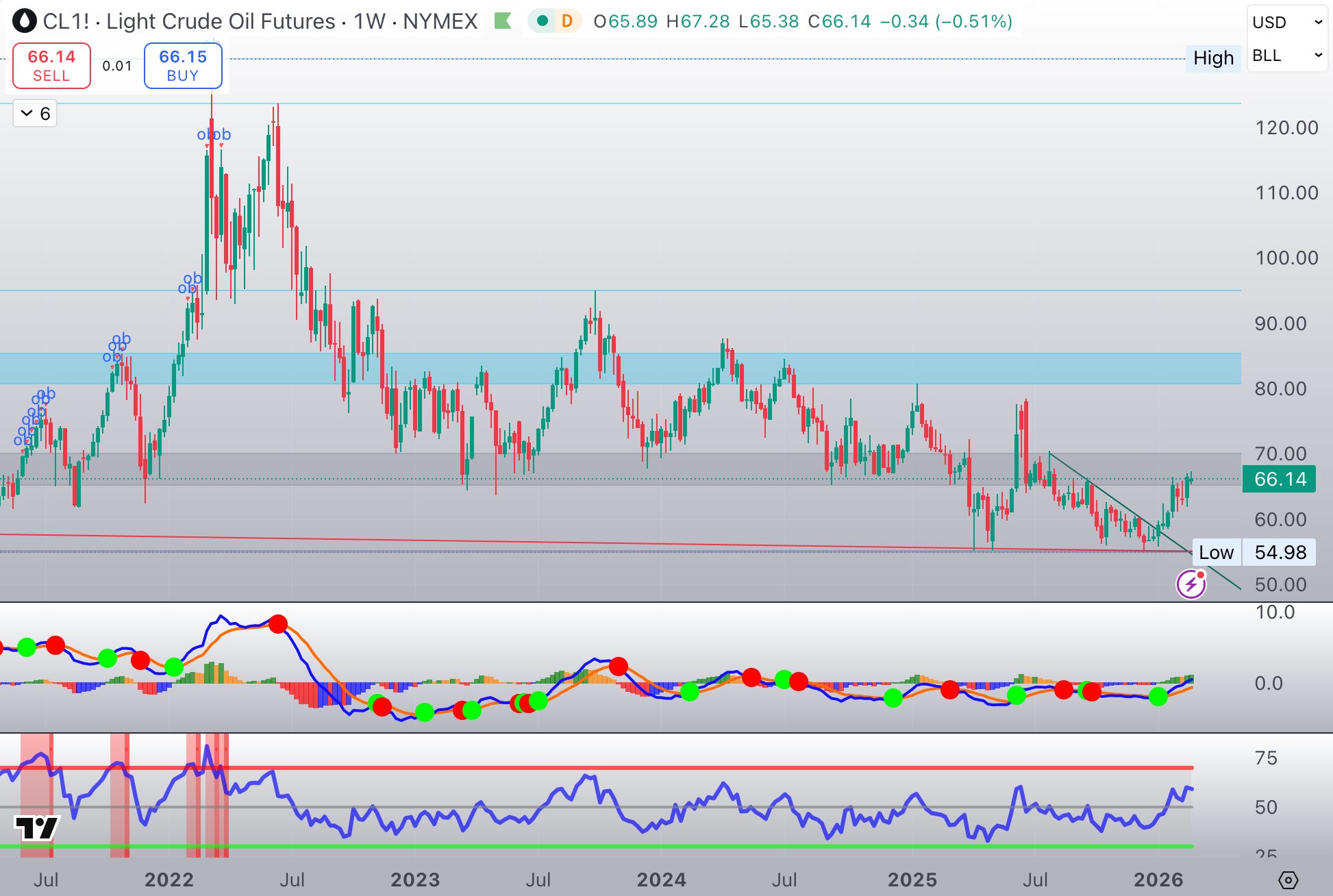
Military strikes WILL NOT be pre-announced.
Investors WILL NOT be given time to reposition.
History shows that when military strikes occur, markets gap — they do not glide.
Considering the extreme overvaluation, concentration participation and speculation in the markets, we are amazed to see how few investors are wiling to take profits and lighten up exposure. FOMO is still massively prevalent. Cash levels in institutional portfolios is at record lows.
The majority of investors are still chasing marginal upside, oblivious to the risks.
But there is one major actor behaving smartly. Investors should probably listen..
Berkshire Hathaway is raising cash hand over fist — at almost $400 billion — more than ever, keeping its assets overwhelmingly in U.S. dollars and short-term Treasury instruments.
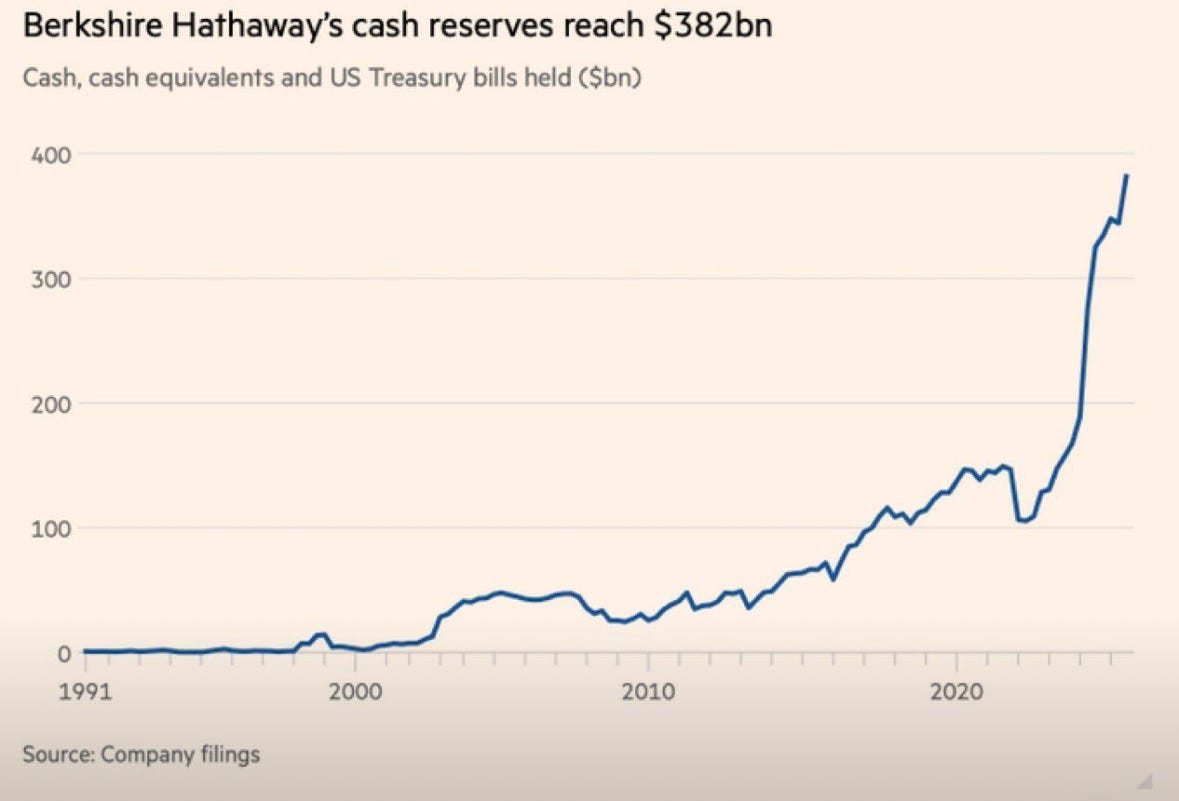
Berkshire is taking notice of both the overvaluation of equity markets and the risks oo the geopolitical environment.
In an environment where geopolitical risk is asymmetric and event-driven, liquidity is not cowardice.
It is strategy.
Cash is not a position of fear.
It is a position of power.